RSS Feed

Article Image Alt Text

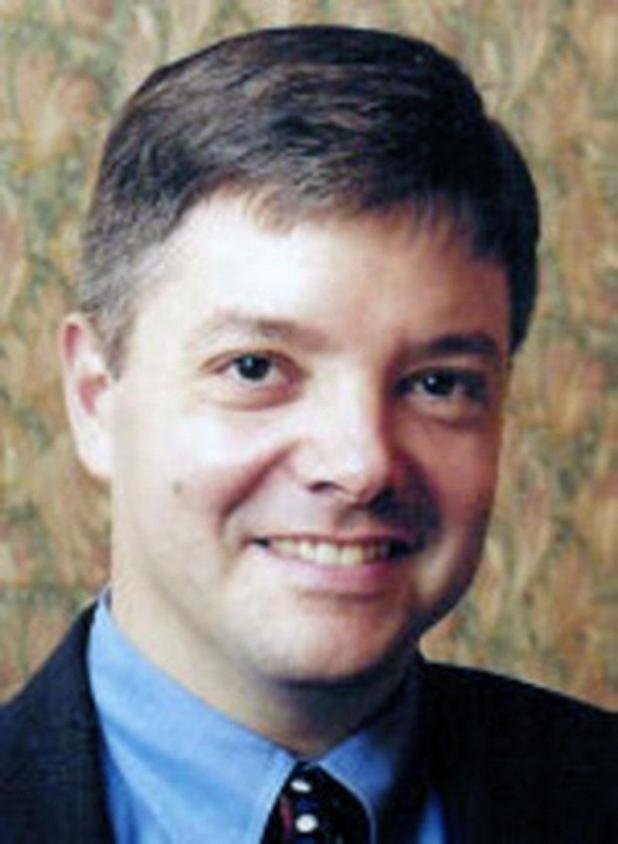
Miss Claire Nicole David & Mr. Travis James Thibodeaux

Engagement announced for Miss Claire Nicole David & Mr. Travis James Thibodeaux

Mr. and Mrs. Dirk David of Abbeville, are pleased to announce the engagement and forthcoming marriage of their daughter, Miss Claire Nicole David of Abbeville, to Mr. Travis James Thibodeaux of Broussard. Travis is the son of Mr. and Mrs. Guy Thibodeaux of Broussard. The nuptial wedding ceremony will take place at 6:30 p.m. on Saturday, October 7, 2023, at St. Mary Magdalen Catholic Church in Abbeville.
Claire is a 2014 graduate of Vermilion Catholic High School. Claire graduated from the University of Louisiana at Lafayette in 2017 with a bachelor’s degree in Accounting. Claire then graduated from Loyola University New Orleans College of Law in 2021. She is employed as an associate attorney with Breaux & Stelly Law Firm, L.L.C. in Lafayette.
Travis is a 2013 graduate of Teurlings Catholic High School. Travis graduated in 2015 from South Louisiana Community College with an HVACR degree. Travis is currently part-owner and Vice President of Operations of Guy Thibodeaux Air Conditioning, Inc. (D.B.A. Granger A/C).

Article Image Alt Text

Chris Landry / The Abbeville Meridional
North Vermilion senior Tucker Denais (5) will move from fullback to the wing this year and will get the ball in a variety of ways, first-year head coach Joe Heintz said.

Giving 100%: Tucker Denais moving from fullback to wing for North Vermilion football team this fall

MAURICE — The North Vermilion Patriots made a surprise run to the non-select Division II state quarterfinals in 2022, and senior Tucker Denais hopes to help the Patriots match or exceed that outcome in 2023.
Denais is moving from fullback to the wing in North Vermilion’s wing-T offense under first-year head coach Joe Heintz. That move brings a shift in his role with the offense, Denais said.
“Last year I played fullback, and my main role was to get three to four yards a play,” he said. “I was more of a power guy.
“This year I moved to the outside, to the wing, and I can do more — play receiver a little bit, catch the ball, still run the ball but more on sweeps. So it’s more one-on-one with a DB, so it’s not as difficult for me. I can use more of my abilities, and not just power.”
Heintz said the move was made to help find ways to get Denais the ball, and get him the ball in space.
“He had a great season last year at fullback,” Heintz said. “I think he’s going to be utilized more in the wing position and in the slot position. We’ll still be able to move him to the fullback position if we need to.
“He’s dynamic on offense for us. He’s very versatile. We can do different things with him. The position that he’s playing now he’s going to get the ball running the football, he’ll catch it a few times in the passing game. We are going to find creative ways to get him the ball.”
The Patriots’ district schedule prepared the team for the postseason, and with teams like St. Thomas More, Westgate, Lafayette Christian and Teurlings Catholic on the district schedule again, that should be the case once more.
“We had a tougher district, and that helped us come together as a team and play better, playing those harder teams in district,” Denais said. “We knew we weren’t going to be playing (that caliber of team) in our bracket in the playoffs.”
Heintz has brought a different kind of energy to practice, Denais said.
“Practices are different, for sure,” the senior ballcarrier said. “He’s got us flying around more. The energy is there. I think it’s going to be better for us this year just because that energy makes a difference in the game.”
“We’ve been trying to practice at a high level,” he said. “I’ve seen a lot of energy on the field at practice. I think the kids are excited.
“I think the kids are hungry. They’re working extremely hard. They just want to be successful.”
Heintz said the first week of practice, the standard that the team set in 2022 showed. Sixty to 70 players have been out every day during the summer workouts and the start of fall work, the coach said.
“They’re working hard,” he said. “We’ve only practiced four days, but you can see improvement in those four days. As a coach, that’s all you can ask from high school kids is for them to get better every day.”
Denais said he is expected to play hard and fly around on offense.
“Just get as much yards as I can at one time,” he said. “Always at a hundred percent.”
And as a senior who doesn’t plan to pursue a college athletic career, he knows it’s his final season.
“It’s my last time,” he said, adding that the seniors are doing a good job as leaders.
“We have a better connection with the underclassmen,” he said. “We grew up with a lot of them.”
“I think this senior class got a taste of going three rounds in the playoffs,” Heintz said. “There’s no gimmes on our schedule. Predistrict, district, we play a tough schedule. I know it prepared the team last year for the playoffs. They were a better team week 11 than week 1. That’s the mark of a good team. If you can see improvement from week to week, from day to day, to me, that’s what marks a good team.”

Article Image Alt Text

Joseph Pillette

Loving Husband, Father, Grandfather, and Great-Grandfather Always in Our Hearts

ABBEVILLE, La. - A home-going celebration of life for Mr. Joseph Louis “Bebo” Pillette, 74, will be held at 11 a.m. on Saturday, August 19, 2023, at True Bibleway Deliverance Church (209 LeBlanc Avenue) with Elder Louis Lollis, officiating.
He will await the resurrection at Saint Paul Cemetery (515 Jacqulyn Street) in Abbeville, LA.
Visitation hours will be observed at True Bibleway Deliverance Church on Saturday, August 19, 2023, beginning at 8:30 a.m. until the time of the service.
"Bebo" as he was affectionately known, was a native and life-long resident of Abbeville, LA. Joseph Louis Pillette was born to, Louise Duhon Demouchet and Randolph Campbell on January 23, 1949.  He was a 1967 graduate of James A. Herod High School and served in the U.S. Air Force as an air traffic controller.  “Bebo” was your neighborhood plumber, electrician, carpenter, and all-around handyman who was able to repair anything broken. The community of Abbeville and surrounding areas appreciated the service of “Joe’s Plumbing and Electric.”  He was never afraid to hold a conversation with anyone who crossed his path. There was always a word of wisdom or knowledge that was received when interacting with him.  An advocate for his community, Joseph served as the President of the NAACP-Vermilion Chapter #6276 for twelve years.  He loved fishing, boxing, and spending time with his children, grandchildren, other family, and dear friends.  Joseph answered his call to glory to be with the Lord on Thursday, August 10, 2023, in the comfort of his home surrounded by his loving family.
He leaves to cherish his memory, a loving, devoted wife: Joyce Bessard Pillette of Abbeville, LA; two sons: Arnold Pillette (Ashley) and Martin Pillette of Abbeville, LA; four daughters: Elizabeth Pillette of New Iberia LA, Joanna Pillette of Abbeville, LA, Delaina Broussard (Joshua) of Abbeville, LA and Angelle Pillette of Beaumont, TX; two brothers: Kibby Pillette (Sharon) of Abbeville, LA and Michael Demouchet (Sherrill) of Lake Charles, LA; two sisters: Mary Louise Goodie of Lafayette, LA and Theresa Boudreaux of Abbeville, LA; thirteen grandchildren, twenty-one great grandchildren, and a host of nephews, nieces, relatives, and friends.
He was preceded in death by his mother: Louise Duhon Demouchet; his father: Randolph Campbell; four brothers: Oris Pillette, Sr., Willis Demouchet, Jr., Albert Campbell, and Sonny Campbell; one sister: Martha Mae Pillette; one grandson: Jamal Pillette; one great-grandson: Dathen Clark; one godchild: Michael Jones.
Active pallbearers are Joshua Broussard, Darrius Pillette, Arnold Pillette, Jr., Donovan Pillette, Thadius Batiste, Sr., and Leonard Marsh.
Honorary pallbearers are Arnold Pillette, Sr., Martin Pillette, Cameron Williams, Jace Williams, Jonah Alexander, Dominic Clark, Morrison Broussard, Sr., Rodney Goodie, Jonathan Goodie, Curtis Tillman, Robert Walker, Darrius Pillette, Jr., and Zy’Myrion Lewis.
The family would like to extend appreciation to the staff of Heart of Hospice, Levy Cancer Foundation, Miles Perret Cancer Services, Lydia Cancer Association, Ochsner Cancer Center of Acadiana at Abbeville General Hospital, Our Lady of Lourdes Regional Medical Center, and the Lafayette VA Clinic.
You may sign the guest book and words of condolences may be expressed at www.fletcherfuneralhomes.org
Arrangements are entrusted to Fletcher Funeral Home (337-369-3341) 609 West Admiral Doyle Drive, New Iberia, LA 70560.

Article Image Alt Text

Jeff Crouere

Rising support for an America first agenda

For 31 months President Joe Biden has worked tirelessly to destroy the “America First” achievements of his predecessor. Unfortunately, Biden has largely succeeded in reversing the popular agenda enacted by President Donald Trump.
While Trump had achieved enhanced security at the southern border, Biden immediately reversed those programs upon taking office. He stopped construction of the border wall, changed key policies, and rolled out the welcome mat for illegal immigrants from across the world. The result has been a humanitarian crisis reaching into our major metropolitan areas, such as New York City, and causing severe stress on our border states which have faced innumerable problems.
Biden’s policies are unpopular with the American people. A recent poll by the Economist and YouGov found that 66% of Americans want increased border security. Unfortunately, President Biden has ignored these demands.
Upon taking office, Biden also decided to attack our domestic oil and gas industry. He shut down construction of the Keystone XL pipeline, placed a moratorium on oil and gas drilling on federal property and enacted a slew of “green energy” initiatives that mainly benefit our foremost enemy, communist China. Thus, America lost its coveted status of being energy independent and became dependent on foreign countries once again.
While Trump achieved peace deals, had diplomatic dialogue with our major adversaries and kept the United States from involvement in any new wars, the Biden approach has been much different. There have been no new peace deals, worsening relationships with our adversaries and a growing involvement in a war against the largest nuclear power in the world, Russia.
The Biden economic agenda also runs contrary to the interests of Americans. President Trump renegotiated the terrible North American Free Trade Agreement (NAFTA) and created terms more beneficial to our economic interests. He also worked diligently to bring back manufacturing jobs to the United States. His goal was to put “America First” in all areas, especially economically.
Unfortunately, numerous corporate leaders in this country are not concerned about American workers. They prefer cheap, foreign labor that is supposedly better for their bottom line.
Many of our leading corporations, such as Apple and Amazon, take advantage of the H-1B guest worker program to hire foreign labor instead of qualified American workers. Every year, 85,000 H-1B visas are issued to foreign workers in specialized areas such as engineering or information technology.
According to the Federation for American Immigration Reform, “the intent behind the program was to create a means for companies to fill temporary skilled worker shortages, but rather than supplementing the U.S. workforce, the program has morphed into a means by which companies can secure cheap labor at the expense of American workers.”
Such abusive treatment of American workers is now on display in Arizona. The Taiwan Semiconductor Manufacturing Company (TSMC) is building a manufacturing facility in north Phoenix that is slated to produce $40 billion in advanced chips.
Last December, President Biden visited the facility and touted its work as evidence of the success of the “CHIPS Act” which was passed in 2022. The legislation authorized $280 billion toward domestic semiconductor research and manufacturing.
However, Aaron Butler, President of the Arizona Building and Construction Trades Council, notes that the legislation has a major “loophole.” It “does not require” that these “facilities will be built by American workers.”
In June, TSMC took advantage of this “loophole” and announced that they would be displacing five hundred American construction workers. These jobs will be filled by five hundred workers from Taiwan.
TSMC stated that the Taiwanese workers are only temporary and have specialized skills. In addition, TSMC claims that the move is needed because it would take longer to train American workers.
Butler vigorously disputes these accusations and notes that American workers have had decades of experience on similar projects and are “well-equipped and able to meet semiconductor demands right now.” He asserts that the American workers have “hundreds of hours of classroom training and field experience.”
Predictably, the Biden administration has refused to get involved in this dispute and has done nothing to protect these American jobs. Key officials should have met with Lai Ching-te, Taiwan’s Vice President and 2024 presidential frontrunner, during his recent visit to New York City, to advocate for U.S. jobs and encourage him to lobby TSMC to change their policies.
As Taiwan is under constant threat of attack by communist China, the country is very dependent on protection from the United States. With such leverage, we should be able to convince Taiwan not to abuse American workers.
Sadly, Biden is not focused on protecting American jobs, border security or our national security. Americans want him to prioritize issues in this country such as our economic woes, our open border, and the historically high drug overdose deaths.
As our social and economic problems grow, Biden seems oblivious and unconcerned. Is anyone surprised that he remains incredibly unpopular?

Jeff Crouere is a native New Orleanian and is a political columnist, the author of America’s Last Chance and provides regular commentaries on the Jeff Crouere YouTube channel and on Crouere.net. For more information, email him at jcrouere@gmail.com

Mice lobby against the better mousetrap

Standing up against a government which will crush the dreams of everyday Americans just to assert its power was the inspiration for my coming to Washington, D.C. many years ago.
The idea that an inventor could build a better mousetrap and the mice could hire a lobbying firm to get Congress or a regulator to ban it was abhorrent to this young man fresh on the heels of reading Atlas Shrugged. Yet, that has unfortunately become the norm in an America which is barely recognizable.
A perfect example of this phenomena is contained within the version of the Federal Aviation Administration reauthorization bill passed by the House of Representatives.
The issue seems trivial, but it is a pure example of the federal government squashing someone, just because they can. The FAA requires tail identification numbers on aircraft at a cost of $10 with about a million separate combinations available.
One entrepreneur figured out that some combinations might be worth more than others. He invested thousands of dollars in purchasing the rights to combinations he believed would be more valuable than the $10 price he paid for them, leaving around half a million combinations with the FAA for those who just wanted a number. He then set-up the apparatus to auction those numbers that he believed would have higher demand to those who were willing to pay for the vanity numbers.
It turned out that the entrepreneur was right, and those who own private jets were willing to pay to get what they considered a more prestigious or personal tail number.
But the inevitable occurred, and the mice decided that the entrepreneur should not be allowed to exist and whined to their trade association and members of Congress.
Even though, the FAA still has an inventory of around half a million unused tail numbers up for grabs for $10 , the House of Representatives acted at the insistence of the mice that they must crush this inventor by making his business illegal.
Of course, the private airplane owners could have simply refused to pay more than $10 for a tail number and destroyed the entrepreneurs business due to lack of interest.
But instead, we now have the House of Representatives on record in favor of squashing the innovator who saw a market, risked his money to see if his idea would work and then implemented a system which uses supply and demand market pricing to determine the true value of any given number.
In a world which is on fire with the Biden administration assaulting freedom from every corner, this one, small current attempt by the ever-expanding administrative state and its congressional allies to crush a few people who are now competing in this market may seem unimportant. I don’t agree.
It is worthwhile to fight for the little guy who faces destruction of his/her dreams and livelihood because the wealthy and powerful mice complained.
When I was a much younger man, Texas Senator Phil Gramm used to refer to Dickie Flatt, a constituent who owned a local printing business as the archetype independent small businessman having to overcome the burdens of taxes and regulations. Gramm used to ask the question, “Is it worth taking it out of Dickie’s pocket” when considering whether a federal government program should be approved.
However, the Senate has the chance to just say no to the idea that Congress should shut down a legitimate business where no one is coerced or compelled to consume the product just because they can.
The Senate should apply this slightly altered Dickie Flatt standard to the FAA Tail Number issue. Is it worth destroying the American dream for someone whose only fault is that he figured out a way to effectively organize and re-sell certain FAA tail numbers just because they can?
Anyone who claims to be a limited government conservative must answer no to this question, and if they don’t, their constituents can rightfully ask, am I next?

Rick Manning is the President of Americans for Limited Government.

Article Image Alt Text

Bill Wilson

Anti-War sentiment is rising on the Right, driven by young people and minorities

The public is growing weary of the globalist cabal continuing to ensnare us financially and otherwise in overseas conflicts that do not benefit Americans and instead create decades of costly chaos.
Our involvement in the Russia-Ukraine dispute has been largely without gain, and the public is turning on those who seek to keep us tethered there. Since the conflict began, Congress and the Biden Administration have directed $75 billion dollars in military and economic funds to Ukraine, and yet there are no signs of peace and many thousands of casualties on both sides.
Conservatives have had enough and are now openly opposing U.S. involvement in Ukraine at an accelerating rate, with the latest surveys showing over half of Republicans oppose continuing to fund Ukraine’s military operations.
Young people, minorities, and those without a college degree are the most vocal critics of our continued involvement in Ukraine and are demanding a new direction in the 2024 presidential election.
Just two months ago, polling from Pew Research Center showed less than half (44%) of Republicans and Republican-leaning independents said the U.S. was providing too much aid to Ukraine, up from 40% in January.
However, the latest New York Times/ Siena College poll shows that number has risen to over half of Republican voters. According to the survey, GOP voters now oppose continuing to provide Ukraine with economic and military assistance by an eight-point margin, 52% to 44%. This number is up eight points in the past two months when compared to the Pew poll, and up a full twelve percentage points since the beginning of the year.
Tides are turning with regard to public opinion on continuing to ensnare ourselves in the border disputes of eastern Europe, and it is largely conservatives taking a stand against foreign meddling.
Nevertheless, significant disparities exist within the GOP. Younger voters, those without a college education, and minorities oppose continued intervention at the highest rates, while older voters and college-educated Whites favor intervention.
GOP voters under 30 oppose continuing to fund Ukraine’s military operations by 37 percentage points, 65% to 28%. Millennials between age 30-44 oppose continued intervention by 19 percentage points, 58% to 39%, and Gen X voters between age 45-64 oppose intervention by 17 percentage points, 57% to 40%.
However, Republicans over age 65 still support continuing to fund Ukraine’s military operations by an 11-percenatge point margin, 53% to 42%.
Opposition to continued intervention in the Russia-Ukraine conflict is also extremely high among minority members of the GOP, particularly Hispanics. Hispanics oppose continuing to intervene in the Ukraine conflict by 42 percentage points, 70% to 28%. Whites narrowly oppose continuing to intervene by 4 percentage points, 46% to 50%, and Blacks oppose intervention by 24 percentage points, 52% to 28%.
There is also a strong division regarding continued intervention in Ukraine by education. Non-college educated voters oppose intervention by 18 percentage points, 57% to 39%, while college-educated voters favor intervention by 9 percentage points, 53% to 44%.
Notably, it is non-college educated minorities who oppose continued intervention at the highest rates, while college-educated Whites support intervention at the highest rates.
Minorities without a college degree oppose intervention by 40 percentage points, 67% to 27%, while Whites with a degree support intervention by 15 points, 56% to 41%. Both college-educated minorities and non-college educated Whites have similar views, opposing intervention by 12 points and 15 points respectively.
This comes on top of polling from CNN/SSRS earlier this spring showing one of the primary concerns for GOP primary voters is avoiding involvement in the Russia-Ukraine conflict, with a significant 80% expressing the importance of the GOP nominee opposing any U.S. entanglement in the dispute.
Women, in particular, are staunchly opposed to U.S. involvement in Ukraine, with 87% of Republican women compared to 75% of men emphasizing the significance of the GOP nominee opposing foreign entanglements. Moreover, younger individuals hold higher rates of opposition to foreign involvement, with 42% of those under fifty considering staying out of the Russia-Ukraine dispute “essential” compared to 31% of those over 50.
Public opinion is shifting, and conservatives are now staunchly anti-war, although there are still strong divisions within the GOP. Young and minority Republicans as well as those who dodged the college-industrial complex are the strongest proponents of non-interventionism, and their views do not appear to be dampening.
A growing share of the public, particularly those on the right, are turning against globalist ideology that seeks to keep America focused on everything except its own people. Opposition to foreign meddling will absolutely play a crucial role in the next presidential election, and all signs indicate the GOP are heavily favoring an antiwar candidate.

Bill Wilson is the former president of Americans for Limited Government.

Robert Romano

“It’s Actually Common to Indict Leaders of Democracies.”
That was the headline of a piece from Foreign Policy’s Ashley Ahn and Brawley Benson on July 18, outlining a sort of categorical imperative for democracies to prosecute their former leaders in a bid to preserve the rule of law, often times when the prosecuting force is from the opposing party.
The context of course are three indictments now leveled at former President Donald Trump, one from New York City and two from President Joe Biden’s Justice Department and Special Counsel Jack Smith, over alleged campaign finance violations, receiving classified documents while he was president and retaining them upon leaving office and most recently, using legal means via state and federal courts, Congress and the Vice President to overturn the results of the 2020 presidential election.
Now a fourth indictment could be in the offing, this time from the Fulton County, Ga., similarly tied to Trump’s 2020 bid to overturn the result in Georgia, which was awarded to President Joe Biden in the Electoral College.
In it, Ahn and Brawley argue, “the indictment and conviction of former leaders in democratic and semi-democratic countries around the world is, in fact, quite common,” citing 48 heads of state convicted in 32 countries, included in a larger subset of 78 leaders indicted in 53 countries.
In other words, argue Ahn and Benson, it’s normal in democracies to throw your opponents in jail.
But not in the United States, arguably the world’s longest running democracy, or better put, constitutional democratic republic.
In 2020 Paul Musgrave, assistant professor of political science at the University of Massachusetts Amherst, in Foreign Policy complained about that fact in another piece, “America Needs to Prosecute Its Presidents”.
In it, Musgrave notes the example of former presidents John Tyler and Richard Nixon, who were never prosecuted or disgraced after leaving office, in Tyler’s case, for participating in the Confederacy (he died before the end of the war), and for Nixon, over the break-in of the Democratic National Committee at the Watergate Hotel in Washington, D.C. in 1972 and his alleged role in covering it up and obstructing Congress’ investigation of the scandal.
Musgrave argued in his 2020 Foreign Policy piece, wrongly as it turned out, “an investigation of the Trump administration is unlikely to be politicized in any meaningful sense…” Trump continues to lead all national polls for the Republican Party’s presidential nomination in 2024 by a lot and remains very competitive against Biden in head-to-head matchups. Democrats use the indictments to attack Trump, Republicans to defend Trump. It’s being politicized.
In Nixon’s case, upon resigning the presidency in Aug. 1974, then-President Gerald Ford promptly pardoned him in Sept. 1974 for any crimes that might have been committed. When he did so, Ford warned of a vicious cycle that would ensue if Nixon were prosecuted after leaving office, calling it “an American tragedy in which we all have played a part. It could go on and on and on, or someone must write the end to it. I have concluded that only I can do that, and if I can, I must.”
Ford argued it was not possible for a former president to get a fair trial, one way or another, stating, “a former President of the United States, instead of enjoying equal treatment with any other citizen accused of violating the law, would be cruelly and excessively penalized either in preserving the presumption of his innocence or in obtaining a speedy determination of his guilt in order to repay a legal debt to society.”
In the case of Trump, it is easy to see how that is already taking shape. While Special Counsel Smith looks to expedite the trials against Trump, and move jurisdiction to Washington, D.C. where jury pools will be heavily Democratic — tying them up on the 2024 presidential campaign that Trump is running in — with Democrats in public opinion polls convinced of his guilt, and Republicans convinced of his innocence.
Ford added, “During this long period of delay and potential litigation, ugly passions would again be aroused. And our people would again be polarized in their opinions. And the credibility of our free institutions of government would again be challenged at home and abroad… [I]t is not the ultimate fate of Richard Nixon that most concerns me, though surely it deeply troubles every decent and every compassionate person. My concern is the immediate future of this great country… As President, my primary concern must always be the greatest good of all the people of the United States whose servant I am.”
Ford warned that domestic tranquility was at stake and threatened if America turned to the practice: “My conscience tells me clearly and certainly that I cannot prolong the bad dreams that continue to reopen a chapter that is closed. My conscience tells me that only I, as President, have the constitutional power to firmly shut and seal this book. My conscience tells me it is my duty, not merely to proclaim domestic tranquility but to use every means that I have to insure it.”
Because, as he stated it would “go on and on and on…” seeing clearly how matters could only escalate in such an environment, at one point saying potential trials “hang like a sword over our former President’s head,” a reference to the ancient Sicilian tale of the Sword of Damocles, popularized by Cicero, wherein Dionysius let Damocles be king for a day, provided that he sit on a throne underneath a sword dangling by a single hair of a horse’s tail, illustrating the fear Dionysius felt every day for his life and why he had to rule so cruelly in order to maintain the throne. In the end, Damocles begs to be allowed to cede the throne.
It is now easy to fast forward from the Trump impeachments of 2019 and 2020 to see how Ford’s warning of a never-ending cycle is true, with House Republicans firing up their own potential impeachment inquiry against President Joe Biden.
Would they be doing that if Trump had never been impeached? It might be a good question, for if not, the implication is that prosecutions, whether in Congress or by the Justice Department, of sitting and former presidents do not necessarily deter, but rather provoke retaliations and escalations as both parties vie for power.
Which is why the Framers ruled out — articulated in Alexander Hamilton’s Federalist No. 70 — distributing executive power among several officials or the concept of a co-presidency, similar to ancient Rome’s constitution that provided for two consuls to serve to check each other’s power out that, ultimately, led to civil wars and the dissolution of the republic and rise of the emperors.
It is also why the Framers made the threshold for conviction in an impeachment so difficult to attain — two-thirds of the Senate must vote to convict a sitting president — to ensure that if something so serious had occurred, it would take a super majority of the several states’ senators, which would include members of the President’s own party, to remove and disqualify the president.
This is the classic problem of republics but also other forms of government, and so the entire constitutional structure was in order cure James Madison called the “mischiefs of faction” in the Federalist No. 10, warning of “the violence of faction,” adding, “The friend of popular governments never finds himself so much alarmed for their character and fate, as when he contemplates their propensity to this dangerous vice.” Madison also hypothesized that the U.S. Constitution could prevent such recurring, reciprocal political strife and civil wars that were well documented to have brought down republican forms of government in antiquity. It turned out not to be true, as less than a century later in 1860 the Civil War began.
Meaning, even under the U.S. Constitution, with due process and other protections of the accused explicitly written in, the wider body politic is always at risk of tearing itself asunder, with factions imprisoning one another being an obvious, predictable cause.
In the current case, the essence is in the state of nature, parties might never agree to a social contract exiting the state of nature if there was not an assurance that standing for election in opposition to an incumbent president, or losing an election would not be grounds for imprisonment. If Trump had won in 2020, there would be no indictments.
When it comes to prosecuting political opponents, the problem isn’t that we aren’t doing that enough. It might be that we’re doing it too much. And doing it more might appear to ensure an equal implementation of those prosecutions, but as has already been seen, it does not appear to act as a deterrent as intended. Instead, it appears to lead to further escalations.
Biden as of yet has not issued any pardon of the former president, leaving the matters to state and federal courts to adjudicate, and ultimately, perhaps, the Supreme Court, where Trump’s attorneys will ultimately seek redress on First Amendment and other grounds. Would the Supreme Court take domestic tranquility into account, as Ford did?
No matter how just partisans might claim all these prosecutions and investigations are, this is not equal justice under the law, it is mutually assured destruction. Ford warned, “I, not as President but as a humble servant of God, will receive justice without mercy if I fail to show mercy.” He was right. But nobody seems to be listening.

Article Image Alt Text

Jim Brown

Mississippi dwarfs Louisiana in educational reform

To get Louisiana off the bottom of the barrel when it comes to educational reform, nothing is more important than developing a preschool program that builds the foundation for young people to learn. For a number of years, the leading voice on early childhood education was State Representative Steve Carter from Baton Rouge. Tragically, Steve passed away in 2021 from Covid complications. To honor his efforts, the legislature passed into law the Steve Carter Literacy Program, which was to provide for payments of up to $1,000 per student per year for eligible services intended to improve literacy skills.
But passing legislation is one thing. Getting proper funding for it is another. After several years of minor financing, this year’s legislature allocated $51 million dollars for this important program. Unfortunately, these funds will only cover a small number of kids and will supply only one sixth of the funds that are necessary. There is a need to properly find an additional 130 thousand slots for kids to be in early childhood learning.
Louisiana ranks next to last for overall child well-being, according to the Annie E. Casey Foundation’s 2023 Kids Count Data Book, with the state’s ranking being near the bottom for economic well-being, health, and family and community. The 2023 report puts Louisiana at 49th out of all 50 states for overall child well-being, coming ahead of only New Mexico. Louisiana had ranked next-to-last in the 2022 report as well.
“Expanding access to child care is a uniquely win-win-win policy,” said Jennifer Roberts, CEO of Agenda for Children. “High-quality child care offers lifelong benefits to children, enables parents to work and improve their children’s economic security and strengthens our economy through increased workforce participation. Making child care affordable and accessible for all families will have huge rewards for all Louisianans.”
For many years, Louisiana has lamented “Thank God for Mississippi.” This refrain no longer works when comparing early childhood learning in Mississippi as to Louisiana. The New York Times reported recently that Mississippi “is lifting education outcomes and soaring in the national rankings. Among children in poverty, Mississippi fourth graders now are tied for best performers in the nation in reading tests and ranked second in math, according to the National Assessment of Educational Progress.” Why the improvement? The Mississippi legislature undertook a major financial commitment to educate preschool kids. “Mississippi is a huge success story, and very exciting,” says David Deming, a Harvard economist and educational expert. “You cannot use poverty as an excuse. That’s the most important lesson.”
High-quality early care and education, particularly for children below age 5, is neither accessible nor affordable for many Louisiana families. That’s why proper funding for pre-K kids is so important. Yet right now, Louisiana spends less than half of 1% of state dollars on early care and education. Over $1 billion in this year’s legislative session was allocated for local projects, some considered “pork barrel.” Apparently, adequately funding preschool education was not all that important. In other states like Mississippi, proper funding is extremely important.
Here’s what Louisiana needs to do. The state should offer high-quality full day programs, with qualified teachers paid at the same rate as elementary school staff members. Many other states are noticing the Magnolia State’s educational success. Louisiana should do the same, and not settle for anything less than offering pre-K education to all of our kids. We can talk all we want to about higher education, and. business development opportunities. But until our kids are better educated and start learning at an early age, the Bayou State will continue to be at the bottom of national rankings. We need to do better. Much much better.

Peace and Justice
Jim Brown

Could the Baby Boomer retirement wave and labor shortages absorb the recession?

The national unemployment rate dipped to 3.5 percent in July, according to the latest data from the Bureau of Labor Statistics, once again hitting more than 50-year lows.
It’s still peak employment as far as the eye can see. Even with the past two years’ high inflation dropping dramatically and disinflation usually correlating with higher unemployment and a recession, that simply has not occurred yet, despite all the warning signs typically associated with an economic slowdown or downturn.
To see why, one must consider the very real labor shortages we have been experiencing.
Job openings measured by the Bureau of Labor Statistics remain highly elevated at 9.6 million. Incredibly, that’s down more than 20 percent below the 12 million peak in March 2022. Although a recent addition to the BLS plethora of data, job openings in the past three recessions have tended to dip significantly, as now.
However, the number of Americans retiring has steadily increased over the past decade, and so have the number of job openings. Americans not in the labor force 65 years old and older have increased 3.36 million since Feb. 2020, from 28.3 million to 31.6 million today.
In Jan. 2009, seniors not in the labor force were just 20.1 million. That’s the Baby Boomer retirement wave, coupled with comparatively lower fertility rates as more women have entered the workforce in greater numbers in subsequent generations.
It is a situation similar to Japan’s demographic decline the past few decades when a rapidly aging population followed very low fertility rates. During the financial crisis and Great Recession of 2008 and 2009, the unemployment rate only reached 5.7 percent (here it reached 10 percent in Oct. 2009), and just 3.2 percent during the Covid recession.
In other words, Baby Boomers leaving the labor force may be absorbing what otherwise would be a significant increase in joblessness, at least for now. The question for the current cycle has been whether those job openings would be enough to forestall job losses in labor markets indefinitely or at least through a period that would have otherwise resulted in the unemployment rate steadily ticking upward. For now, that appears to be the case.
One item to still keep an eye on is the spread between 10-year treasuries and 2-year treasuries, an inversion of which usually predicts a recession on the horizon as long term growth is perceived to be lower than short term growth. The 10-year, 2-year inverted briefly in March 2022 and then succumbed fully in July 2022, where it has remained. As of now, it remains inverted at -0.72 percent. That’s up significantly from early July, when it was at -1.08 percent.
Usually, as the economy turns into a recession, the yield curve will tend to uninvert itself as the Federal Reserve ramps up purchases of treasuries and drops interest rates. The Fed hasn’t done that yet, after hiking interest rates for the past year, and has stated it will continue to hike interest rates until inflation returns to more normal levels.
Speaking at a press conference following the central bank’s rate hike on July 26, Federal Reserve Chairman Jerome Powell stated, “My colleagues and I are acutely aware that high inflation imposes significant hardship as it erodes purchasing power, especially for those least able to meet the higher costs of essentials like food, housing, and transportation… We have been seeing the effects of our policy tightening on demand in the most interest-rate-sensitive sectors of the economy, particularly housing and investment. It will take time, however, for the full effects of our ongoing monetary restraint to be realized, especially on inflation. In addition, the economy is facing headwinds from tighter credit conditions for households and businesses, which are likely to weigh on economic activity, hiring, and inflation.”
Powell added a word of warning, “Reducing inflation is likely to require a period of below-trend growth and some softening of labor market conditions.”
That is, either an economic slowdown or even a recession. Unemployment is still near record lows, at 3.5 percent in July and the Federal Reserve in June projected it to rise steadily to 4.1 percent this year and up to 4.5 percent in 2024, an implied 1.3 million jobs losses between then and now, as it sees inflation continuing to cool off from its current levels. And it only sees 1 percent inflation-adjusted economic growth in 2023, 1.1 percent in 2024 and 1.8 percent in 2025.
However, those GDP estimates were from a month ago, and the minutes for the Fed’s July meeting are not yet available. Since then, the Bureau of Economic Analysis reported 2.4 percent inflation-adjusted growth in the second quarter, following a 2 percent increase in the first quarter. So, to hit just 1 percent growth for the entire year would require almost no growth or negative growth going forward.
In that case, the question of unemployment rising might simply be one of timing. But with the labor shortages, perhaps it won’t be as bad as it otherwise might have been. As usual, stay tuned.

Robert Romano is the Vice President of Public Policy at Americans for Limited Government Foundation.

Article Image Alt Text

Jim Bradshaw

Dynaflow, Hydra-Matic, or four on the floor?

Once upon a time, this was the time of year when ads promoting snazzy new car models for the coming year began to fill the newspapers. Some of you may recall the days when people still recognized cars by their brand names, and when most manufacturers began to tease potential buyers with ads about the new ones that would soon show up at their dealerships.
In 1950, for example, Ford and Chevrolet were the top sellers for families on modest budgets, but dealers promised more than a nice price. Smooth new automatic transmissions were featured in lots of the ads.
Wood Motors in Abbeville, Whitney Motors in Kaplan, and Robin Motors in Jeanerette proclaimed that “Ford’s the car that’s winning America’s heart.” The 1951 sedan, they said, was “the smart buyer’s choice … a sweetheart for economy, s sweetheart to own, and a sweetheart to drive.” They promised that just the solid sound of the door’s closing would be all that was needed to seal the deal.
Donald Motors in Jennings, Nettles Chevrolet in Abbeville, and Jeanerette Motors were among those promoting the Chevrolet Bel Air as “the style star of an all-star line.” The 1951 Bel Air, they said, “for the first time in the low-price field, is a car that combines all the dash and jauntiness of a convertible with the comfort and safety of an all steel body by Fisher.”
“Hold on!” Duchamp Motors in St. Martinville said, claiming that convertibles were just as safe as any cars. Its ad featured a Chrysler convertible and declared it “a beautiful model of a great idea,” built better and safer than other cars. Chrysler guaranteed that its fluid drive transmission would give the smoothest ride to be found.
Bacon Buick in Crowley contested that. The headline on its ad asked, “How smooth can a ride be?” The new Buick, with its Dynaflow transmission, of course, provided the answer. “We’d like to show you just how much smoothness your money can buy,” the ad said. “How levelly you float over cobbles and car tracks — over rutty gravel and wavy blacktop.”
“Wait a minute,” said Rayne Economy Motors. “Ten minutes behind the wheel of a Nash Airflyte and you’ll have an entirely new concept of motor car performance, comfort, safety, and handling ease.”
Frenzel Motors in Abbeville argued that buyers should “drive a DeSoto before you decide on any other car at any price.” Broussard Motors, just down the street, said buyers could “make your new car dollars worth more” by investing in a Dodge. It’s Gyro-Matic transmission may not have been the smoothest, but it was “the lowest priced automatic transmission” on the market.
Moosa Motors in Eunice said that “dollar for dollar, you can’t beat a Pontiac,” with its smooth Hydra-Matic Drive. Champ Motors in Lafayette argued the streamlined new Studebaker was the best choice for both stylish and economical driving.
Raywood Motors in Abbeville and Gueydan Motors urged folks to forget about the old cars they’d tried before. The 1951 Kaiser, “America’s newest car” was the one to buy. Just “one mile behind the wheel and you’ll want to own it,” they promised.
But Jerry Ashley Chevrolet, perhaps a bit ahead of the times, said to forget about cars altogether and get a good truck.
His trucks were handy, economical, comfortable, and could “haul more loads for more miles for less,” he said. They didn’t have a fluid-drive transmission, but you could count on the always reliable 4-speed Syncro-Mesh gearbox.
“See them in our showroom,” he urged.
That, of course, was the idea behind all of the ads — to get people into the dealership so that the price haggling could begin.
You can contact Jim Bradshaw at jimbradshaw4321@gmail.com or P.O. Box 1121, Washington LA 70589.

Pages

Vermilion Today

Abbeville Meridional

318 N. Main St.
Abbeville, LA 70510
Phone: 337-893-4223
Fax: 337-898-9022

The Kaplan Herald

219 North Cushing Avenue
Kaplan, LA 70548